Bill S1766 Could Help Revive New Jersey’s Vacant Malls and Office Parks
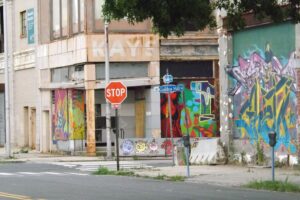 Physical retail centers and office parks in New Jersey have struggled to stay afloat in the age of the internet. Online shopping has taken over the retail industry, leaving numerous malls and outlets abandoned. Meanwhile, office parks have struggled to retain tenants due to the rise of remote work. Some of these properties, however, have found new life through conversion into mixed-use developments. By combining residential and commercial purposes, mixed-use developments provide residents with convenient access to restaurants, retail stores, and public transportation, all within walking distance of where they live.
While mixed-use properties have become attractive for developers, current zoning laws, which segregate commercial from residential uses, have stood in the way of obtaining the required approvals. Thanks to recent efforts from New Jersey legislatures, however, that may not be the case for much longer. Bill S1766 aims to streamline the process of mixed-use redevelopment for qualifying properties. If the bill becomes law, many communities affected by blight from abandoned malls and office parks could finally see genuine reform.
Here’s an overview of the proposed bill and how its enactment could impact both New Jersey real estate developers and blighted communities.
Background
Before the internet, malls were the king of the retail industry. These social hubs, often covered in pink and teal tiles and decorated with exotic plants, were among the most profitable business ventures. Today, people shop from their smartphones anywhere in the world and have their orders delivered directly to their homes. More recent innovations like augmented reality (AR) allow people to see how products will look before clicking the order button, further reducing the need for in-person shopping. In a similar way, the internet changed the workplace environment for many businesses. Telecommunication and videoconferencing allowed fully remote jobs to exist. The COVID-19 pandemic accelerated the trend toward remote work. As a result, demand for office space steadily declined.
While the internet has brought many conveniences, it has contributed to the decline of many traditional retail centers and office parks, leaving large properties either struggling to retain tenants or sitting vacant. This vacancy crisis continues to negatively impact the commercial real estate market.
The 2019 Stranded Assets Law
Even though the 2019 amendment to the LRHL was intended to provide municipalities with a new tool to combat blight from vacant or abandoned malls and office properties, it did not address a crucial problem standing in the way of mixed-use development: single use zoning laws. These laws segregate properties into commercial and residential purposes. Although the amendment made it easier for municipalities to declare blight, it did not provide an efficient path for developers to obtain permits for mixed-use projects. Since mixed-use projects typically require a Zoning Board super-majority and clear legal proof that they serve the public interest without causing substantial harm, the burden still weighs heavily on developers.
Bill S1766
In January 2026, the NJ Legislature introduced Bill S1766. This bill creates a limited preemption of local zoning authority for qualifying office park and retail center conversions. If enacted, it would provide a much more efficient redevelopment process.
To qualify, office parks must be at least 50,000 square feet, while retail centers must be at least 15,000 square feet. Qualifying properties must have either (1) maintained a 25% vacancy rate or higher for 18 continuous months or (2) experienced significant economic losses for the previous three years. Owners must also demonstrate they’ve made a good faith effort to lease or market their property.
Eligible projects must include at least two different uses, and one of these must be residential. There is also a requirement that at least 20% of the residential units be reserved for very-low-income, low-income, or moderate-income housing. In addition, the bill excludes industrial uses from the eligibility criteria.
Even if a proposed development meets all the requirements, there are still potential challenges to overcome. For one, development cannot take place on contaminated sites without proper remediation. In addition, nearby “high impact uses” must also be considered before approval is granted. Finally, historic properties require review by the appropriate historic preservation commission before approval is granted.
The Status
Bill S1766 has cleared its committee but has not yet received a Senate floor vote on final passage. It remains on Second Reading, which means it is eligible to be scheduled for further Senate consideration before proceeding to a final vote.
Conclusion
Bill S1766 reflects a practical response to a familiar problem: once-thriving malls and office parks are no longer serving many New Jersey communities as they once did. By creating a clearer path for mixed-use redevelopment, the bill could help transform stranded commercial properties into places that provide housing, businesses, recreation, and renewed economic activity. The proposal is not a cure-all, and issues such as affordability, contamination, historic preservation, and local planning concerns will still require careful review. But if enacted and implemented thoughtfully, S1766 could give municipalities and property owners a valuable tool to turn blight into opportunity.
To view the latest version of the bill and track its progress, click here.